
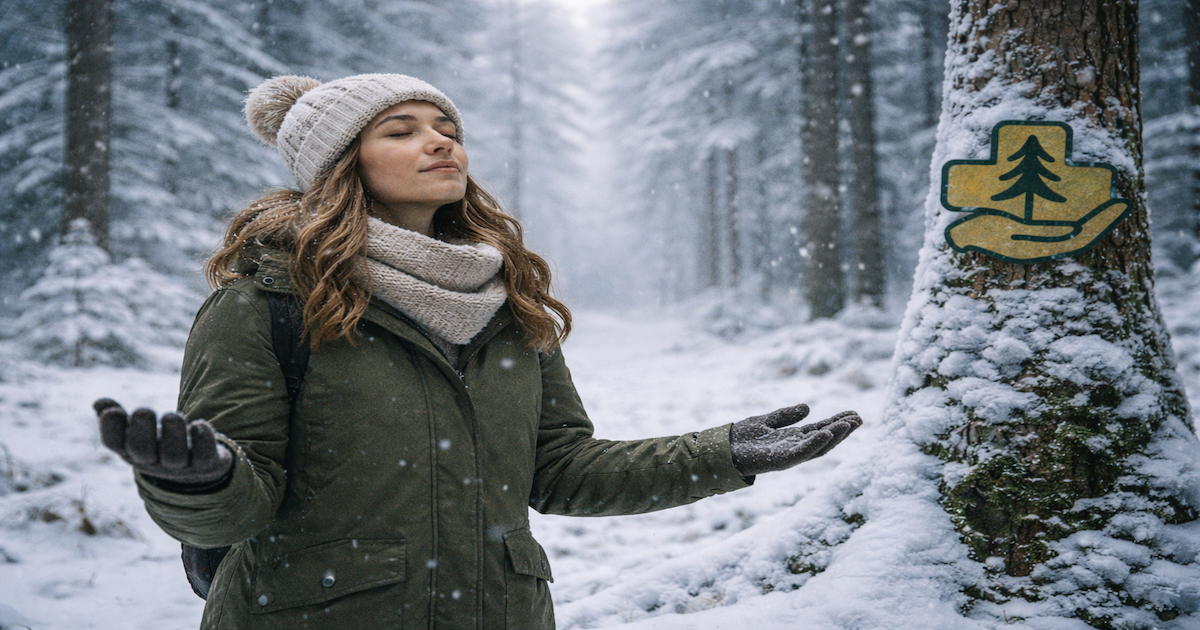
Winter forest therapy offers a unique opportunity to slow down, breathe deeply, and reconnect with nature’s quietest season.
As snow softens the landscape and cold air sharpens our senses, mindful time in the forest becomes an invitation to be fully present, even in the chill.
Many people avoid the woods in winter, assuming it’s too barren or too cold for meaningful connection. But for forest therapy practitioners and nature lovers, this is a season of subtle beauty, deep quiet, and inward reflection.
With the right preparation and intention, winter can be one of the most powerful times for forest therapy. This guide will help you stay warm, connected, and grounded as you explore snowy trails.
Contents
Dress for Stillness: How to Layer for Winter Forest Therapy
Comfort is the foundation of awareness. In winter forest therapy, staying warm allows you to be still and attentive rather than distracted by discomfort.
Dressing in layers creates a personal climate that supports your body and enhances your sensory experience.
A mindful layering system includes:
- Base Layer: Begin with moisture-wicking wool or synthetic fabric. Avoid cotton, which retains moisture and cools the body.
- Mid Layer: Add fleece, wool, or down to trap body heat effectively.
- Outer Layer: Use a windproof and waterproof shell to protect against snow and wind. Choose breathable materials to help manage moisture from within.
- Accessories: Wear wool socks, insulated boots, thermal gloves or mittens, and a warm hat or hood. A neck gaiter or balaclava can protect your face from wind and cold air.
- Optional Items: Bring traction cleats for icy trails, hand warmers, and a waterproof mat or sitting pad for comfortable rest stops.
The right gear allows you to slow down and observe the landscape without discomfort, supporting stillness and attentiveness throughout your walk.
Sensory Invitations: Deepening Presence in a Snowy Forest
Winter forest therapy invites us to listen more closely and notice the details that colder months reveal. These sensory invitations help guide attention back to the present moment.
Try offering or practicing these simple, open-ended prompts:
- “Listen to the Snow.” Notice the sound of your footsteps, whether they crunch, squeak, or soften. Pay attention to what the snow is doing to the soundscape around you.
- “See Your Breath.” In winter, your breath becomes visible. Observe its rhythm, shape, and how it moves through cold air.
- “Touch the Bark.” Find a nearby tree and feel its texture. Is it smooth like beech, peeling like birch, or deeply ridged like oak?
- “Meet a Tree in Winter.” Choose a tree to observe closely. Notice its shape, bark, buds, and branching pattern. These are key features used in winter tree identification and can offer a grounding focal point for your session .
The forest in winter may appear quiet, but with a receptive mind, it becomes alive with subtle invitations.
Caring for Sensitive Senses in the Cold
To fully engage in winter forest therapy, it’s important to keep your senses open and comfortable. The hands, face, and feet are especially sensitive to cold, and discomfort can quickly pull you out of the experience.
Try these practical approaches:
- Protect Your Face: Use a soft scarf or gaiter to shield your cheeks and nose from wind and dry air. Choose breathable fabric so you can still breathe easily and fully.
- Layer Your Hands: Wear thin liner gloves beneath insulated mittens. This allows you to remove the outer layer briefly to write, touch, or guide participants while still keeping some warmth.
- Keep Feet Warm: Choose insulated boots and wool socks. For extra comfort, bring toe warmers if you expect to stand or sit for extended periods.
Protecting your body helps create a safe container for exploration and sensory engagement.
Planning a Winter Forest Therapy Walk
A well-designed winter forest therapy session offers the chance for deep presence and reconnection, but thoughtful planning is essential to support both comfort and safety.
Consider these key elements:
- Time of Day: Plan your walk for midday, when temperatures are typically warmer and light is strongest.
- Session Length: Keep sessions shorter than usual. Sixty to ninety minutes is often ideal for cold-weather walks.
- Trail Selection: Choose low-risk trails with stable footing and minimal elevation change. Snow-covered routes are often safer than icy paths.
- Safety Preparations: Bring extra gloves, a headlamp, water, and a fully charged phone. Let someone know your route, especially in remote areas.
- Closing Ritual: End with a warming tea ceremony using seasonal herbs such as pine, spruce, or cedar (check for plant safety). This offers warmth and grounding to close the experience.
- Tree Identification: Winter is a perfect time to explore bark, buds, and branching forms. Include a brief activity to support seasonal plant connection and build ecological awareness .
By planning with care, you support both the physical needs and deeper emotional benefits of the forest therapy experience.
Embrace the Stillness of Winter Forest Therapy
In the cold, life slows down, but your capacity for connection can deepen.
Winter forest therapy brings forward qualities of stillness, reflection, and clarity.
The quiet is not empty, it’s full of invitations to come closer, breathe more deeply, and sense more fully.
With proper layers, intentional movement, and openness to the forest’s winter character, even the most barren trail becomes a place of quiet healing.
Let the cold be your companion.
Let winter lead you inward.
Let the forest hold you gently while everything else slows down.

1 thought on “Winter Forest Therapy: Staying Present in the Cold”
Comments are closed.