
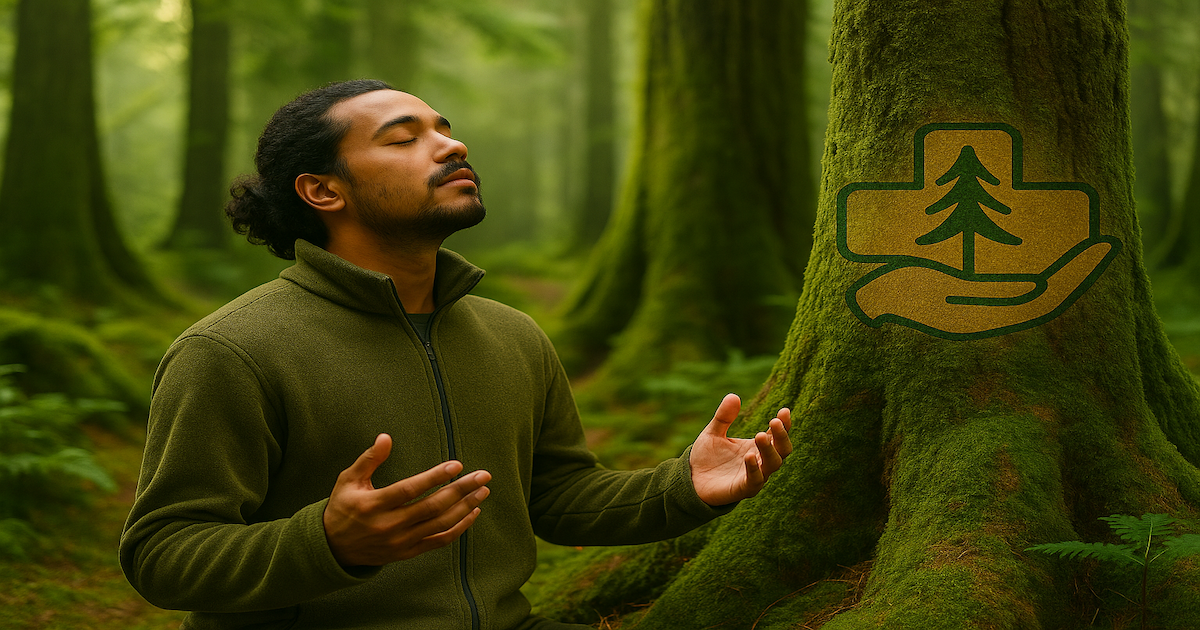
In the modern world of constant digital input and urban overstimulation, many are turning to nature for balance, healing, and reconnection.
Forest Therapy offers more than just a walk in the woods, it is a sensory experience designed to re-integrate our minds and bodies through conscious engagement with the natural world.
At the heart of this practice lies sensory immersion, a process that activates all five senses as one integrated system.
But what does science say about this? Let’s explore.
Contents
- 0.1 What Is Sensory Immersion in Forest Therapy?
- 0.2 1. Sight: Beyond Looking—Into Seeing
- 0.3 2. Sound: Nature’s Acoustic Therapy
- 0.4 3. Smell: The Invisible Healer
- 0.5 4. Touch: Grounding Through Contact
- 0.6 5. Taste: Reawakening Primitive Senses
- 0.7 The Nervous System: A Unified Response
- 0.8 Practical Integration for Guides and Practitioners
- 0.9 Conclusion: Five Senses, One System
- 1
What Is Sensory Immersion in Forest Therapy?
Sensory immersion means engaging the senses, sight, sound, smell, taste, and touch, fully and intentionally.
When practiced mindfully in natural environments, this activation does more than relax us; it recalibrates the nervous system, enhances neuroplasticity, and strengthens our embodied connection to the earth.
Rather than treating the senses as separate tools, Forest Therapy encourages sensory unification, allowing all senses to work in harmony, fostering a deeper, somatic awareness of place and self.
1. Sight: Beyond Looking—Into Seeing
Visual input in natural settings lowers cognitive fatigue and stress. Exposure to “soft fascination” (such as the play of light through leaves or the symmetry of a fern) allows the brain to rest while still being engaged.
- Studies show that gazing at fractal patterns in nature (like tree branches and leaf veins) triggers the parasympathetic nervous system and induces calm.
- The visual complexity of forests improves attentional recovery far more than urban environments.
2. Sound: Nature’s Acoustic Therapy
Birdsong, rustling leaves, and water flow stimulate the auditory nerve in ways that sync with brainwave patterns associated with calm and alertness.
- Natural sounds have been shown to reduce cortisol levels, enhance mood, and even support immune function.
- Unlike city noise, which increases stress responses, forest acoustics tend to entrain the nervous system into a state of relaxed vigilance, a trait inherited from our ancestors who needed to be attuned to natural cues.
3. Smell: The Invisible Healer
Forest air contains phytoncides, aromatic compounds emitted by trees (especially conifers). Inhaling these compounds can boost natural killer (NK) cell activity, an essential part of immune defense.
- Olfactory receptors directly link to the limbic system, meaning that scents in the forest rapidly influence memory, emotion, and mood.
- Just 15 minutes of walking among pines or cedar can measurably affect parasympathetic nervous system activity, leading to lowered blood pressure and improved heart rate variability.
4. Touch: Grounding Through Contact
Touch, often overlooked in nature connection, is central to embodied sensory immersion.
- Barefoot walking (earthing), touching bark, dipping hands in cold streams—these tactile encounters activate the vagus nerve, which modulates inflammation, heart rate, and social engagement.
- Studies show that haptic attention (mindful tactile exploration) can heighten presence and reduce symptoms of anxiety and dissociation.
5. Taste: Reawakening Primitive Senses
While taste is the least used in forest therapy (for safety reasons), even subtle tastes in the air (like salt, pollen, or sap) remind the body of its primal attunement to environment.
- In guided experiences with wild edibles (when safely facilitated), taste becomes a deep sensory anchor, connecting participants with place through ancient biochemical recognition.
- This sensory act activates the gustatory cortex, reinforcing our integration with the ecosystem.
The Nervous System: A Unified Response
What ties these senses together is the nervous system’s integrated, embodied response to environmental stimuli.
Forest Therapy doesn’t just stimulate the senses individually; it harmonizes them.
This is why participants often report feelings of wholeness, groundedness, and clarity after a session.
- The polyvagal theory helps explain why sensory-rich, safe environments like forests can calm the autonomic nervous system and increase feelings of social connection and emotional safety.
Practical Integration for Guides and Practitioners
Incorporating full sensory immersion into guided walks can deepen the therapeutic impact:
- Use “invitation language” that encourages participants to notice shifts in one sense through another (e.g., “How does this scent change the way you see this place?”)
- Allow time for quiet, sensory-rich exploration without verbal instruction—giving the nervous system space to reorganize naturally.
- Be mindful of seasonal variations and how they shift sensory availability (e.g., bark texture in winter, scent in spring, visual vibrancy in autumn).
Conclusion: Five Senses, One System
When the five senses operate not as isolated channels but as a single, integrated system, they create a holistic experience of embodiment and belonging.
Forest Therapy isn’t about observation, it’s about sensory participation.
In an age of disembodiment and distraction, guiding others into unified sensory presence in the forest might just be the most radical, and healing, act we can offer.

1 thought on “Sensory Immersion: Reconnecting Body and Mind Through Forest Therapy”
Comments are closed.