
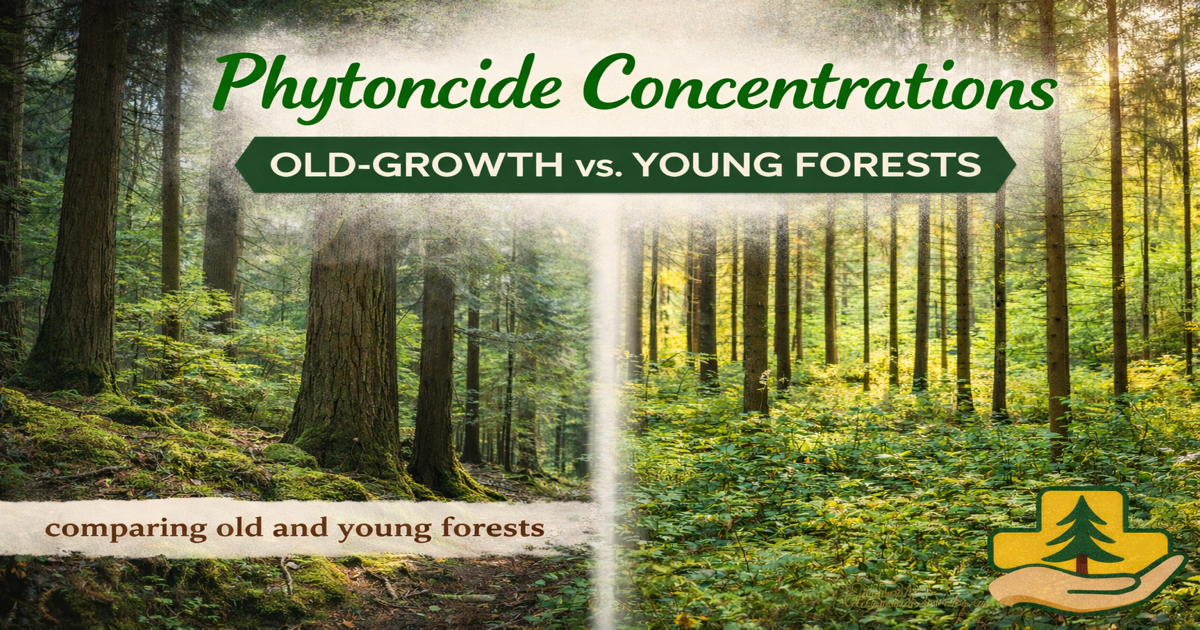
Old-growth forests typically contain higher phytoncide concentrations than young forests due to mature tree density, species variety, and accumulated biomass. However, young forests may still offer measurable benefits, especially if they contain high-emitting species like pine or cypress. The variation in phytoncide levels depends on tree age, type, season, and environmental conditions, not just age alone.
Key Takeaways
- Phytoncides are linked to immune support and mood regulation【42†source】
- Session locations may affect participant outcomes
- Understanding tree maturity helps guides plan invitations
- Old-growth areas may offer enhanced olfactory environments
- Young forests can be optimized with species-aware selection
- This knowledge supports evidence-informed practice
What are phytoncides and why do they matter?
Phytoncides are volatile organic compounds (VOCs) emitted by trees and plants as part of their immune defense system. In humans, exposure to certain phytoncides, such as alpha-pinene or limonene, has been associated with:
- Reduced cortisol levels
- Enhanced natural killer (NK) cell activity
- Lower blood pressure and heart rate
- Improved mood and cognitive function【42†source】
Do old-growth forests have more phytoncide concentrations?
Generally, yes. Old-growth forests often show higher phytoncide concentrations due to:
- Higher biomass density: More mature trees emit more VOCs per unit area
- Stable ecosystems: Less human disturbance and stable microclimates support steady emission
- Tree species diversity: Broader mix of conifers and hardwoods increases phytoncide variety
- Thick understory and forest floor activity: Additional layers contribute to total emissions
What about young or regenerating forests?
Young forests still offer value, especially if:
- Dominated by conifers such as pines or firs
- Located in sunlit areas (phytoncide emissions rise with temperature and light)
- Dense in early-growth biomass and seasonal leaf/needle production
But emissions may be lower overall due to:
- Fewer mature trunks and canopies
- Less microbial and fungal maturity in the forest floor【43†source】
- Higher variability in species mix (especially in plantation forests)
Research Explained Simply: What do the studies say?
Field studies in Japan and Korea show that phytoncide levels are influenced more by species and season than just age. However, forests with old-growth features, such as large, mature conifers and minimal disturbance, tend to have more stable, high-level VOC output across seasons【42†source】.
Key phytoncide emitters include:
- Japanese cypress (hinoki)
- Pine (multiple species)
- Cedar
- Spruce
- Eucalyptus
Which is “better” for forest therapy?
It depends on your session goal:
| Session Focus | Best Forest Type |
|---|---|
| Immune or stress support | Old-growth conifer forest |
| Cognitive and creative reset | Young deciduous woods |
| Trauma-sensitive environments | Open, light-rich younger forest |
| Seasonal scent engagement | Mixed-age forest in spring/summer |
Both forest types can support positive outcomes when chosen with intention.
Common mistakes
- Assuming “older” always means better (species and density matter more)
- Choosing location by appearance rather than emission science
- Ignoring seasonal variation in VOC output
- Relying on plantation forests without diversity
- Not accounting for wind, weather, or human disturbance
- Overusing phytoncide claims without context or citations
FAQ
How do I measure phytoncide concentrations in the field?
Portable VOC sensors are emerging, but currently expensive. Most guides rely on existing research or select high-emission tree types, such as cypress and pine, to approximate conditions.
Are phytoncides only present in conifer forests?
No. While conifers are especially rich in monoterpenes like alpha-pinene, deciduous trees and even shrubs emit phytoncides, just at different rates and compound profiles.
Does season affect phytoncide output?
Yes. Emissions are typically highest in late spring to early summer when temperatures rise and trees are in full metabolic activity. Cold, wet winters may reduce airborne concentrations, especially in young forests.
What are the top forest types for phytoncide exposure in the UK?
Ancient pine woodlands, mature spruce forests, and mixed deciduous-conifer zones. Look for minimal foot traffic and intact canopy layers for the best results.
Are essential oils a good substitute?
Not quite. While essential oils contain concentrated phytoncides, they lack the atmospheric interplay, negative ions, and microbial diversity of the living forest【42†source】. Use them to complement, not replace, forest time.
Phytoncide concentrations are dynamic quality of the forest, not a static trait of age alone. Guides and clients alike benefit from understanding how tree maturity, species, and environment all shape the therapeutic potential of forest air. Old-growth forests offer rich sensory atmospheres, but younger forests can also support healing, with intention and awareness,
