
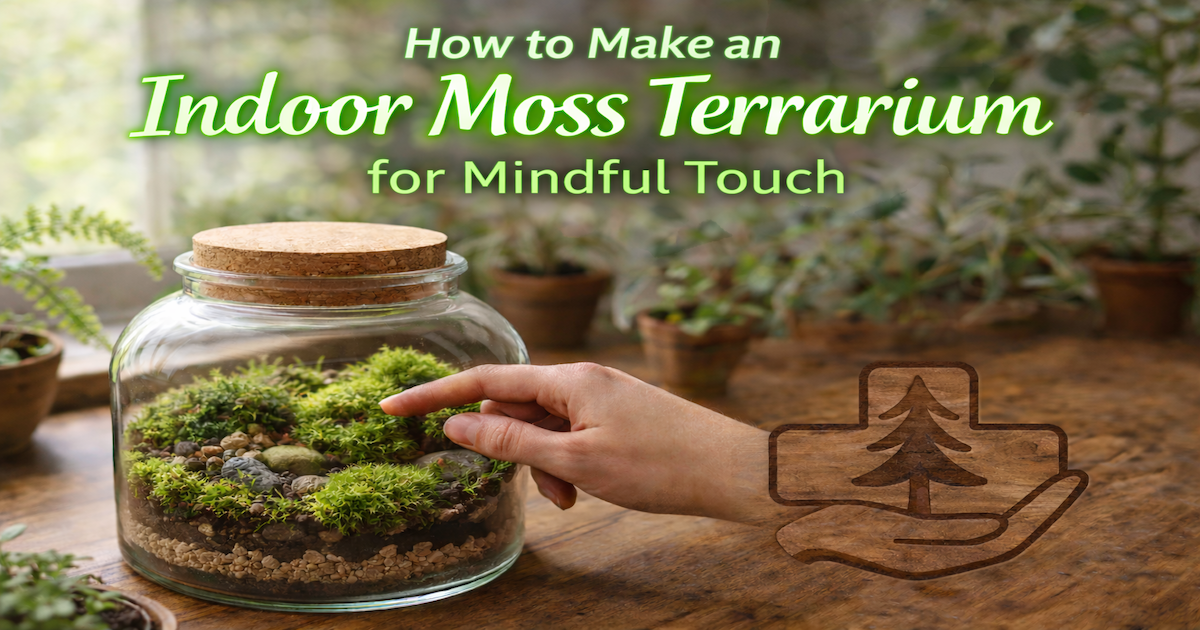
An indoor moss terrarium is a self-contained glass garden that brings forest calm into your home. To make one, gather a clear glass container, stones, charcoal, soil, and living moss. Layer the materials for drainage and humidity balance. Mist lightly, place near indirect light, and use mindful touch, pressing, misting, and observing textures, to anchor awareness and relaxation.
Contents
Why This Matters for your indoor moss terrarium
- Offers a year-round sensory nature connection indoors.
- Supports stress relief through tactile mindfulness.
- Encourages stewardship of living ecosystems on a small scale.
- Enhances mood and focus through biophilic engagement.
- Bridges forest therapy and home practice.
Step-by-Step: How to Make an Indoor Moss Terrarium
1. Gather Your Materials
You’ll need:
- A clear glass vessel (jar, bowl, or dome)
- Small pebbles or gravel
- Activated charcoal (for odor and moisture control)
- Moisture-retentive soil (or sphagnum moss base)
- Living moss (cushion, sheet, or fern moss)
- Spray bottle with filtered water
- Tweezers or a small wooden stick
2. Create the Foundation
Add:
- A 1–2 cm layer of pebbles for drainage.
- A thin layer of charcoal.
- 2–3 cm of damp soil.
This replicates the layered ecology of a forest floor, balancing air, moisture, and microbial life.
3. Add Moss Mindfully
- Place moss gently with your fingertips or tweezers.
- Notice textures—velvety, springy, cool.
- Press down slightly to secure contact with the soil.
This tactile awareness aligns with forest therapy’s grounding techniques.
4. Mist and Seal
Mist lightly until the moss glistens. If your container has a lid, close it partially to retain humidity while allowing some airflow. Moss thrives in 70–90% humidity and indirect light.
5. Place and Observe
Keep the terrarium near soft, indirect light. Observe condensation cycles: droplets forming and clearing mimic forest water cycles. Weekly: open for airflow, remove mold, and re-mist.
Using the Terrarium for Mindful Touch
How can I use a moss terrarium as a mindfulness practice?
Bring your attention to texture. Rest fingertips lightly on the moss. Notice temperature, density, and spring. Breathing slowly, trace the surface for one minute. This sensory grounding mirrors forest therapy’s tactile invitations.
What sensations help deepen the experience?
Cool moisture, soft compression, earthy scent, and visual greenness. Engaging these multiple senses supports nervous system downregulation.
How does moss reflect forest intelligence?
Mosses are ancient plants that absorb water directly through their leaves and thrive through symbiosis with microorganisms. Observing their adaptive simplicity can invite reflection on resilience and interdependence.
How do I care for my terrarium sustainably?
Use filtered water, avoid over-misting, and trim dead parts instead of replacing whole clumps. This teaches reciprocity and minimal-impact care.
How can guides integrate terrariums into sessions?
Terrariums serve as tactile anchors during indoor forest therapy workshops or post-walk reflections. They’re especially valuable in urban or winter contexts where outdoor immersion isn’t possible.
Common Mistakes
- Overwatering, leading to mold.
- Direct sunlight exposure, which overheats moss.
- Ignoring airflow—causes condensation imbalance.
- Using soil with fertilizers or chemicals.
- Handling moss roughly or too often.
FAQ
What type of moss is best for terrariums?
Cushion and sheet moss (Leucobryum glaucum, Hypnum spp.) adapt well indoors and maintain vibrant green hues.
Can I collect moss from outdoors?
Yes, with permission and sustainability in mind—never take more than a small patch. Rinse gently before placing to remove soil insects.
How long do moss terrariums last?
With moderate humidity and light, many live for years, slowly forming micro-ecosystems of moss, microbes, and condensation.
How often should I mist my terrarium?
Once or twice a week, depending on humidity. If glass fogs heavily, reduce misting and open the lid for a few hours.
What emotional benefits are linked to moss care?
Caring for moss cultivates patience, sensory awareness, and gratitude, key psychological outcomes of nature connection.
Creating an indoor moss terrarium blends artistry, ecology, and mindfulness. Each touch is a dialogue with living matter, soft, silent, and ancient. Whether you guide others or tend one privately, it can become a small forest sanctuary for the senses.
