
Contents
- 0.0.1 Understanding Forest Therapy Outcomes
- 0.0.2 What Shapes Forest Therapy Outcomes?
- 0.0.3 Guided Forest Therapy Outcomes: Support, Structure, and Shared Space
- 0.0.4 Autonomy, Silence, and Intuitive Flow
- 0.0.5 Guided vs. Solo Comparison
- 0.0.6 Choosing the Right Forest Therapy Approach for You
- 0.0.7 Conclusion: Maximizing Forest Therapy Outcomes
- 0.0.8 Want to Explore Both Paths?
- 0.0.9
- 1
Understanding Forest Therapy Outcomes
Forest therapy, also known as shinrin-yoku or “forest bathing”, has gained widespread recognition as a natural path to healing. From lowering stress levels to enhancing emotional clarity, the forest therapy outcomes are compelling. But how do those outcomes shift based on how the therapy is experienced?
In this article, we explore the differences in forest therapy outcomes between guided sessions and solo practices, helping you determine which path best aligns with your goals.
What Shapes Forest Therapy Outcomes?
Forest therapy outcomes are influenced by various factors, including the level of structure, emotional support, presence of a guide, and the individual’s comfort in nature. Whether guided or solo, forest therapy is rooted in slowing down, tuning in to the senses, and deepening one’s relationship with the natural world.
But how do outcomes differ depending on the format?
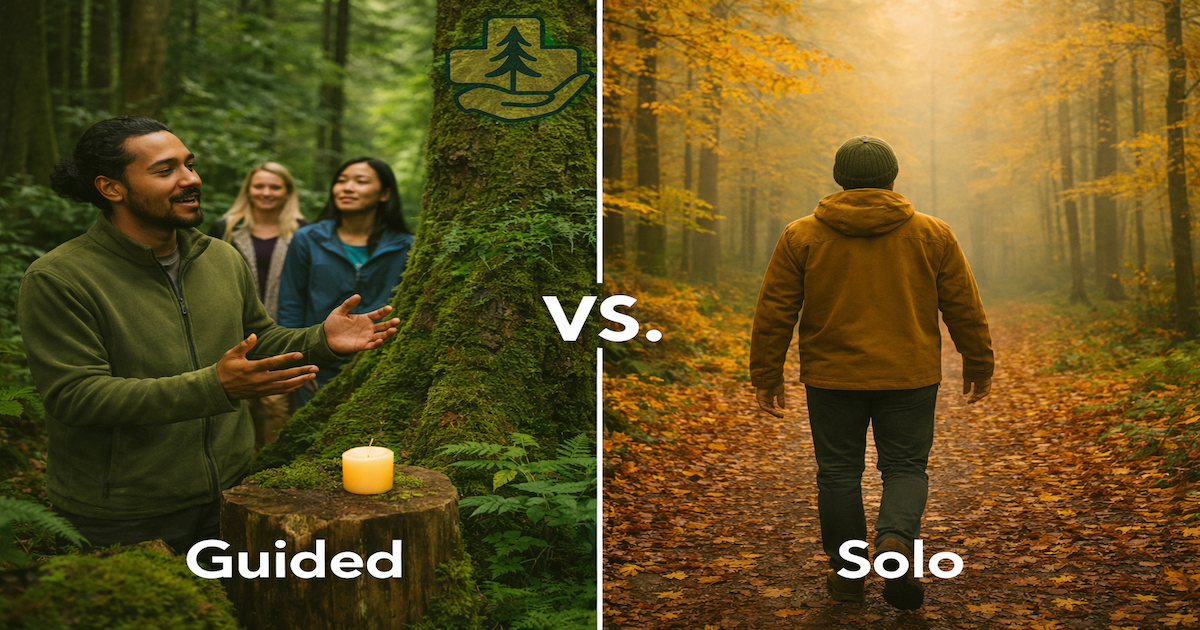
Guided forest therapy involves a certified guide who facilitates a sequence of invitations to engage the senses, reflect, and connect.
This structured approach significantly shapes the forest therapy outcomes in several ways:
Key Forest Therapy Outcomes from Guided Experiences:
- Emotional Support: Having a guide creates a safe space for participants to process emotions or grief.
- Group Connection: Sharing circles encourage empathy, validation, and belonging.
- Structured Deepening: Carefully designed invitations foster mindfulness and embodiment.
- Enhanced Accessibility: Especially helpful for beginners, guided walks reduce anxiety about “doing it right.”
- Therapeutic Mirroring: The guide’s reflections often help participants recognize deeper emotional insights.
These outcomes often result in heightened emotional clarity, nervous system regulation, and a deeper sense of community connection.
Autonomy, Silence, and Intuitive Flow
Solo forest therapy is a more self-directed experience, where individuals move through the forest at their own pace without a facilitator.
The forest therapy outcomes in this approach emphasize independence and personal rhythm.
Key Outcomes from Solo Practice:
- Empowerment & Self-Reliance: Making intuitive choices enhances self-trust.
- Solitude and Stillness: Deep silence can open doors to profound self-awareness.
- Spontaneous Encounters: Without a structured plan, nature often speaks in unexpected ways.
- Lifestyle Integration: Solo sessions can more easily be woven into everyday routines.
For experienced nature-goers, solo practice may offer subtler, longer-term forest therapy outcomes—like expanded awareness and a stronger sense of interconnectedness with the land.
Guided vs. Solo Comparison
| Aspect | Guided Forest Therapy | Solo Forest Therapy |
|---|---|---|
| Structure | Curated flow with invitations | Flexible, self-guided |
| Support | Emotional and psychological guidance | Self-reflection without external support |
| Social Interaction | Group sharing and mirroring | Quiet introspection |
| Depth of Presence | Facilitated mindfulness practices | Self-initiated awareness |
| Typical Outcomes | Emotional regulation, connection, clarity | Empowerment, inner calm, spiritual insight |
| Best For | Beginners, healing journeys, those seeking connection | Experienced practitioners, solitude seekers |
Both approaches produce valuable forest therapy outcomes, but the path you choose can influence the depth, tone, and sustainability of those benefits.
Choosing the Right Forest Therapy Approach for You
When considering your own forest therapy outcomes, ask yourself:
- Do I prefer structure or spontaneity?
- Am I seeking community or solitude?
- Do I need emotional support, or do I want space for self-guided insight?
- Am I new to nature-based practices or well-seasoned?
Your answer may change over time—and that’s the beauty of forest therapy. Both guided and solo practices can be woven together over a lifetime to cultivate long-lasting forest therapy outcomes.
Conclusion: Maximizing Forest Therapy Outcomes
Whether you’re seeking relief from stress, emotional healing, or simply a deeper bond with nature, forest therapy delivers powerful outcomes.
- Guided forest therapy outcomes often include emotional release, increased self-awareness, and connection.
- Solo forest therapy outcomes tend to focus on inner peace, empowerment, and intuitive clarity.
The most effective path? The one that meets you where you are today—and evolves with your journey.
Want to Explore Both Paths?
At Forest Therapy Club, we offer resources for both guided sessions and solo practices. Begin with the support of a certified guide, then branch into your own solo explorations with the confidence and tools you’ve gained.
👉 Learn more about upcoming guided walks and solo practice resources here

4 thoughts on “Forest Therapy Outcomes: Guided vs. Solo Experiences”
Comments are closed.