
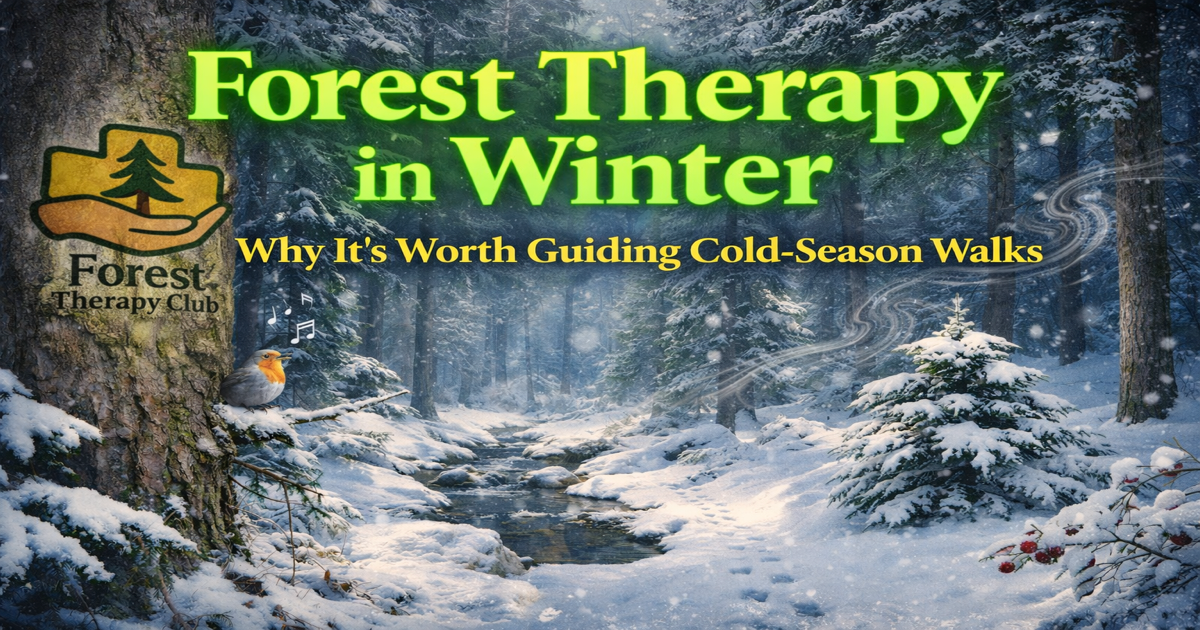
Forest therapy in winter offers distinct sensory, psychological, and ecological experiences that deepen connection and presence. The quiet, spacious landscapes support introspection and awe, while bare trees and slowed rhythms reveal forest textures often overlooked. Guides who embrace winter can offer sessions that are more grounding, trauma-sensitive, and spiritually rich, especially for those feeling disconnected or overstimulated by modern winter culture.
Why Forest Therapy in Winter Matters
- Shifts assumptions. Many guides hesitate to offer winter sessions, missing out on seasonal depth.
- Expands access. Clients experiencing winter blues or isolation often benefit from cold-season connection.
- Encourages deeper noticing. The stillness and minimalism of winter fosters profound sensory awareness.
- Supports guide growth. Learning to design for cold, quiet conditions sharpens intuitive guiding.
- Aligns with nature’s rhythm. Winter offers an invitation to slow down—mirroring the forest’s own pace.
What makes forest therapy in winter unique?
Winter forests offer a stark, quiet environment. With deciduous trees bare and snow dampening sound, participants often report feeling more mentally spacious. Visual distraction is reduced, allowing deeper internal focus. The absence of green can heighten awareness of color, texture, and contrast in the landscape.
- Snow muffles sound, enhancing auditory sensitivity
- Cold air can support mindful breath awareness
- Animal tracks, frost, and light patterns draw attention to subtleties
How does winter support emotional regulation?
Research on winter walking shows that cold exposure may activate the parasympathetic nervous system when paired with mindful movement. Forests in winter naturally encourage stillness, which can downshift hyperarousal states common in urban and digital life.
Clients may experience:
- Relief from seasonal overwhelm
- A grounded sense of solitude (not loneliness)
- A gentler form of nature connection that doesn’t overstimulate
Is it safe to guide sessions in winter?
Yes—if sessions are adapted intentionally. Consider shorter durations (60–75 mins), low-exertion routes, and backup protocols for icy paths or deep snow. Encourage layered clothing, warm drinks post-walk, and use of natural windbreaks.
Winter Guide Safety Essentials:
- Scout for ice and shelter points in advance
- Encourage hand/toe warmers and thermoses
- Avoid overexertion to prevent sweat-chill
- End with an invitation that gently reorients, not reactivates
How do you adapt invitations for winter?
Choose invitations that invite subtle noticing or interaction with cold elements. Offer slowness without stillness, movement helps with circulation. Grounding exercises like listening for silence or feeling the cold on exposed skin can become powerful anchors.
Examples of winter invitations:
- “Notice what’s moving and what’s still”
- “Let the forest show you something resting”
- “Find the smallest patch of color in the landscape”
- “Follow your breath like a puff of steam”
Can you guide trauma-informed Forest Therapy in winter sessions?
Winter’s quiet, open spaces can feel safer for those with trauma, especially when sensory overload is a concern. However, cold can also trigger discomfort or fear. Offer informed choices, including shorter solo times and optional movement.
Use check-ins and consent practices more frequently, and invite clients to name their edge regarding weather exposure.
Common Mistakes
- Cancelling winter sessions entirely due to fear of low turnout
- Using the same pace or structure as summer walks
- Ignoring how cold impacts nervous system response
- Failing to adapt invitations to the slowed landscape
- Not giving participants enough movement or choice
- Overestimating client comfort without check-ins
- Skipping seasonal education (e.g. frost, hibernation metaphors)
FAQ
Is forest therapy effective in winter?
Yes. Participants often report deeper calm, clearer mental states, and feelings of awe during winter walks. The sensory contrast to indoor life enhances impact.
What’s the ideal length for a winter forest therapy session?
45 to 75 minutes is usually ideal. Shorter solo times and longer openings can help participants acclimate.
Can I guide in snow or ice?
Yes, with proper gear and safety planning. Use snowshoes, avoid steep or shaded trails, and keep group sizes small if conditions are unstable.
What are the best invitations for winter?
Stick with slow, inward-focused prompts. Cold air and quiet landscapes pair well with breath, noticing, and subtle movement invitations.
Do I need different training to guide in winter?
No, but winter guiding benefits from scouting, gear knowledge, and increased attunement to body language and group needs.
Winter is not the off-season, it’s the deep season. Offering forest therapy in winter invites your clients into a landscape of quiet, resilience, and clarity. When you guide with care, cold becomes a collaborator. A walk through snow and silence can thaw what busyness numbs.
