
Contents
- 1 Quick Answer
- 2 Why This Matters
- 3 What Is Forest Therapy at Home?
- 4 Can Forest Therapy Work Indoors or in Cities?
- 5 What Are the Core Elements of a Home Forest Therapy Practice?
- 6 What Does a Typical At-Home Session Look Like?
- 7 Can I Guide Others in Home-Based Forest Therapy?
- 8 Common Mistakes
- 9 FAQ
- 10 Closing
- 11 Forest Therapy at Home Key Questions, Clear Answers.
- 11.1 Can you do forest therapy without a forest?
- 11.2 How does forest therapy support nervous system regulation at home?
- 11.3 What invitations work best at home?
- 11.4 How do I make my space feel more like a forest?
- 11.5 What’s a micro-practice for busy people?
- 11.6 “Forest therapy can be practiced at home through simple, intentional nature-connection practices like sensory invitations, mindful rituals, and indoor or garden-based experiences. The key isn’t location, it’s presence.”
Quick Answer
You can practice forest therapy at home by creating intentional moments of sensory connection with nearby nature. Use your garden, balcony, indoor plants, or a mindful ritual near a window. The key is slowing down, engaging the senses, and building reciprocity with the natural world. Home-based forest therapy works best when it’s regular and aligned with the seasons.
Why This Matters
- Many people live far from forests or natural parks
- Everyday nature can still support parasympathetic “rest-and-digest” activation
- Home practice builds long-term nature-connection habits
- Guides can offer home-based programs or hybrid formats
- Improves accessibility for mobility-limited or neurodivergent participants
- Helps integrate forest therapy into daily life, not just one-off walks
What Is Forest Therapy at Home?
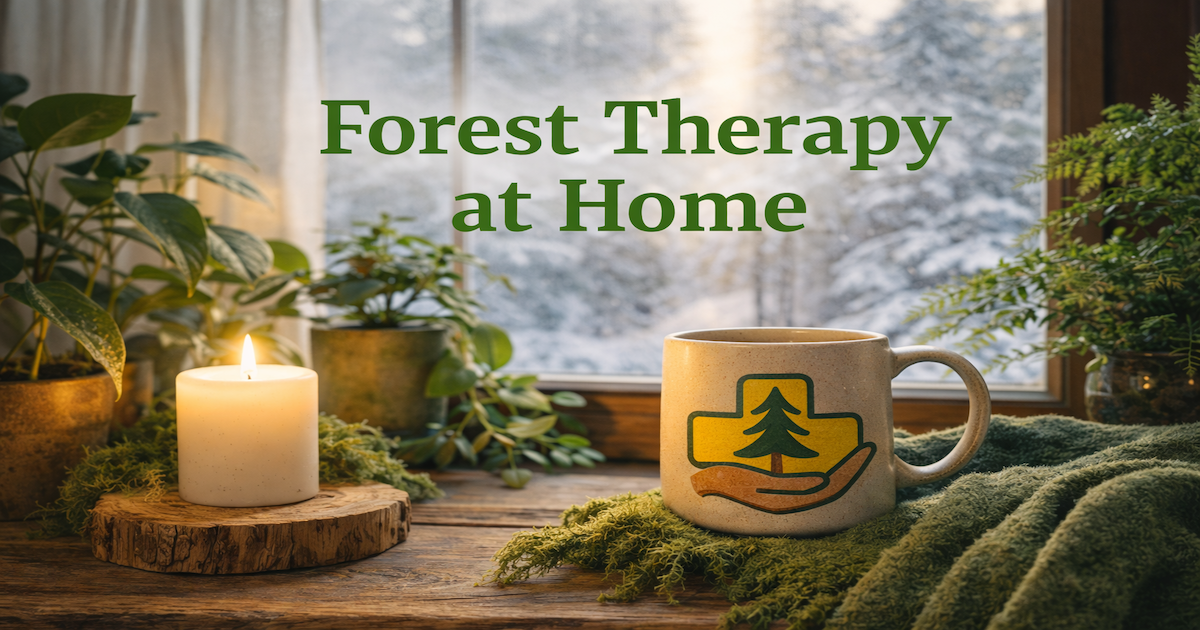
Forest therapy at home adapts the principles of forest bathing to familiar, accessible environments—gardens, balconies, windowsills, or even an indoor “nature corner.” It can be self-guided or facilitated, and it focuses on mindful presence, sensory awareness, and relationship with nearby nature.
Key features:
- Slow pace and non-goal orientation
- Focused sensory invitations
- Rituals to open and close the experience
- Nature relationship cultivated over time
Can Forest Therapy Work Indoors or in Cities?
Yes. Even short, intentional experiences with nearby green spaces, houseplants, or natural elements can feel calming and restorative. While deeper forest immersion offers different inputs, home practice builds the foundation: attention, sensitivity, and consistency.
What Are the Core Elements of a Home Forest Therapy Practice?
You don’t need a forest, but you do need a simple structure.
Core elements:
- A regular time or rhythm (weekly or seasonal)
- A sensory-rich space (garden, yard, balcony, plant corner)
- An opening and closing ritual
- A slowing down practice (breath, silence, mindful walking)
- A nature-based invitation (example: “notice what’s moving”)
- A journal or reflection prompt
What Does a Typical At-Home Session Look Like?
Here’s a simple structure you can repeat.
Example structure (30–60 minutes):
- Opening – Set an intention, light a candle, name the season
- Arrival – 5 minutes of breathing outdoors or near a plant
- Sensory invitation – Notice shades of green, textures, or light
- Solo time – Quiet walking, sitting, or observing
- Closing – Journal 1–2 thoughts, thank the space, tidy up
- Integration – Return to life slowly
Can I Guide Others in Home-Based Forest Therapy?
Yes, especially in hybrid or online formats. Keep invitations simple and offer options.
Guiding tips:
- Choose safe, low-risk invitations
- Offer alternatives for limited mobility
- Encourage privacy and minimal distractions
- Use grounding practices and clear sound/visual cues
- Provide integration prompts for after the session
Common Mistakes
- Treating it like a checklist or productivity exercise
- Overusing tech (guided app instead of direct experience)
- Expecting “forest results” indoors or in cities
- Skipping opening and closing rituals
- Practicing only once or inconsistently
- Ignoring seasonal shifts in your space
FAQ
What if I don’t have access to any outdoor space?
Use a houseplant, a natural object (stone, pinecone), or a view of sky/tree from a window. Presence and sensory attention matter more than location.
How often should I practice?
Once a week is a strong starting rhythm. Forest therapy is less about intensity and more about consistency. Monthly sessions aligned with seasonal transitions can also work well.
Is forest therapy at home good for kids?
Yes, just adapt the pace and language. Use playful prompts like “find something that smells interesting.” Keep it short (10–20 minutes) and always optional.
Can this help with anxiety or overwhelm?
Many people report calming effects and better regulation from short, regular home practices. It’s not a replacement for therapy, but it can be a supportive wellness practice.
Do I need training to lead forest therapy at home?
For personal practice, no certification is needed. To guide others formally, training is recommended so you can hold safety, ethics, and participant care well.
Closing
Forest therapy at home reminds us that nature connection isn’t reserved for remote forests or big trips. It’s a relationship you can nurture daily, on the porch, in the kitchen, or beside a plant. The key isn’t where you go. It’s how you listen.
Download a free checklist to design your own home forest therapy session.
Forest Therapy at Home Key Questions, Clear Answers.
Can you do forest therapy without a forest?
Yes. Gardens, balconies, windows, and indoor plants can all be “gateways” when approached with slowness, sensory awareness, and presence.
How does forest therapy support nervous system regulation at home?
Brief sensory contact with natural elements—watching tree movement, breathing near a plant, listening to birds, may support a shift into a calmer, more regulated state.
What invitations work best at home?
Use simple prompts: “notice something moving,” “explore a texture,” “listen for the farthest sound.” Home invitations should be small, safe, and sensory-first.
How do I make my space feel more like a forest?
Add natural textures, calming scents (pine, cedar), and reduce harsh noise/light where possible. A dedicated “nature corner” can help build consistency.
What’s a micro-practice for busy people?
Stand near a window for 2 minutes. Look at the sky. Slow your breath. Name one thing you see. Tiny pauses can shift your state and rebuild connection.
“Forest therapy can be practiced at home through simple, intentional nature-connection practices like sensory invitations, mindful rituals, and indoor or garden-based experiences. The key isn’t location, it’s presence.”
🟩 Download your free Home Forest Therapy Checklist — a simple guide to design your own calming session.
