
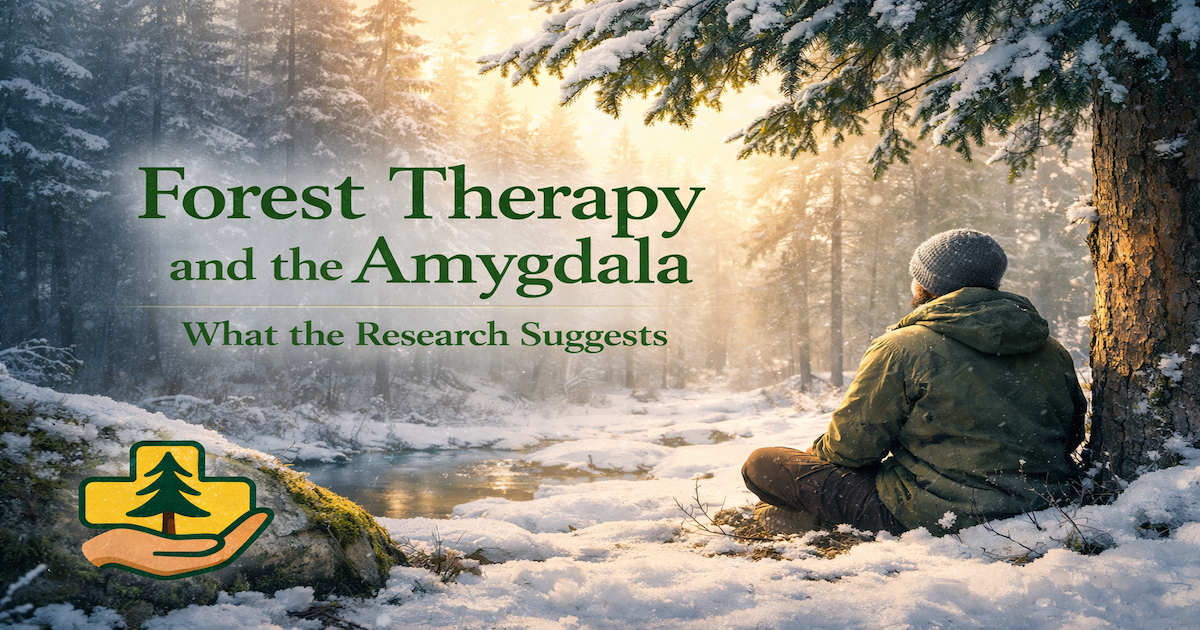
Forest therapy and the Amygdala may help the brain’s center for threat detection and emotional reactivity. Exposure to forest environments has been associated with decreased amygdala activity in response to stress, potentially supporting emotional regulation and reducing anxiety-related reactivity. While not a treatment, this aligns with broader findings in neuroscience that nature exposure calms the nervous system and supports resilience.
Key takeaways
-
The amygdala is key in how we process fear, threat, and emotional memories.
-
Overactivation of the amygdala is linked to anxiety, PTSD, and chronic stress.
-
Nature immersion may reduce amygdala hyperactivity without requiring verbal processing.
-
Guides and facilitators can align invitations with these neurobiological insights.
-
This supports trauma-informed and evidence-aligned forest therapy practice.
How does the amygdala respond to stress?
The amygdala monitors our internal and external environment for signs of danger. It can trigger the sympathetic nervous system, our fight, flight, or freeze response, before we’re even consciously aware of a threat. Chronic overactivation is common in people under sustained stress or with anxiety disorders.
What happens to the amygdala in forest environments?
In multiple imaging studies, participants exposed to natural settings showed reduced amygdala activity compared to urban environments. One 2015 study found that a 90-minute walk in nature reduced rumination and activity in the subgenual prefrontal cortex and amygdala—regions linked to mood disorders .
What mechanisms may drive this calming effect?
Several nature-based inputs may contribute:
-
Visual input: natural fractals and soft fascination lower cognitive load
-
Auditory input: forest soundscapes promote parasympathetic activation
-
Air quality and phytoncides: some compounds influence immune and nervous system balance
-
Microbial diversity: forest microbiomes may play a role in immune–brain signalin
These combined inputs may downshift amygdala alertness over time, helping the body remember safety.
What forest therapy practices support this?
Practices that engage gentle sensory awareness and embodied presence may be especially useful. Examples include:
-
Mindful forest walking
-
Sit spot reflection
-
Tree-grounding and breathwork
-
Open-ended invitations that require no performance or analysis
These align with slowing the nervous system and may indirectly support amygdala regulation .
How is this relevant for trauma-informed practice?
Forest therapy offers a nonverbal, choice-based context that can soothe the amygdala without triggering verbal memory or cognitive overprocessing. It allows for gentle downregulation through multisensory presence, without forcing catharsis or disclosure. This can be safer for clients with trauma histories, provided the guide holds clear boundaries and invitations are optional .
Common mistakes
-
Assuming forest therapy “heals” the amygdala (avoid medical claims)
-
Overloading participants with scientific explanations mid-walk
-
Using activation-heavy invitations (e.g., “confront your fear”)
-
Ignoring safety protocols for clients with PTSD or panic disorders
-
Offering one-size-fits-all “calming” techniques
-
Assuming more nature time always equals better outcomes
FAQ
What is the amygdala and why is it important?
The amygdala is an almond-shaped brain structure involved in processing emotions, especially fear and threat. It’s essential to our survival, but when overstimulated, it can fuel chronic anxiety and stress reactivity.
Can forest therapy rewire the brain?
While it’s not a medical intervention, research suggests that consistent time in nature may promote neuroplastic changes, including reduced amygdala activation, improved prefrontal regulation, and increased vagal tone.
How long does it take for nature to affect the amygdala?
Some studies have shown changes in as little as 20 to 90 minutes of nature exposure. However, cumulative, repeated time in natural settings seems to have greater impact.
Are there risks in using forest therapy for trauma?
Yes. Without proper facilitation, nature experiences can bring up intense emotions. Guides must use trauma-sensitive practices, avoid pushing disclosure, and always maintain participant choice.
What kind of forests are best for amygdala regulation?
Diverse, quiet, accessible forests with sensory richness, such as varied textures, natural sounds, and phytoncide-rich trees, may offer more calming benefits. Urban green spaces can still be effective if well chosen.
Forest therapy and the amygdala are increasingly connected through emerging neuroscience. While forest therapy is not a cure or clinical treatment, it offers a powerful setting for downregulating emotional reactivity in a safe, embodied way. Guides who understand the brain–nature connection can design more supportive, science-aligned sessions for diverse participants.
