
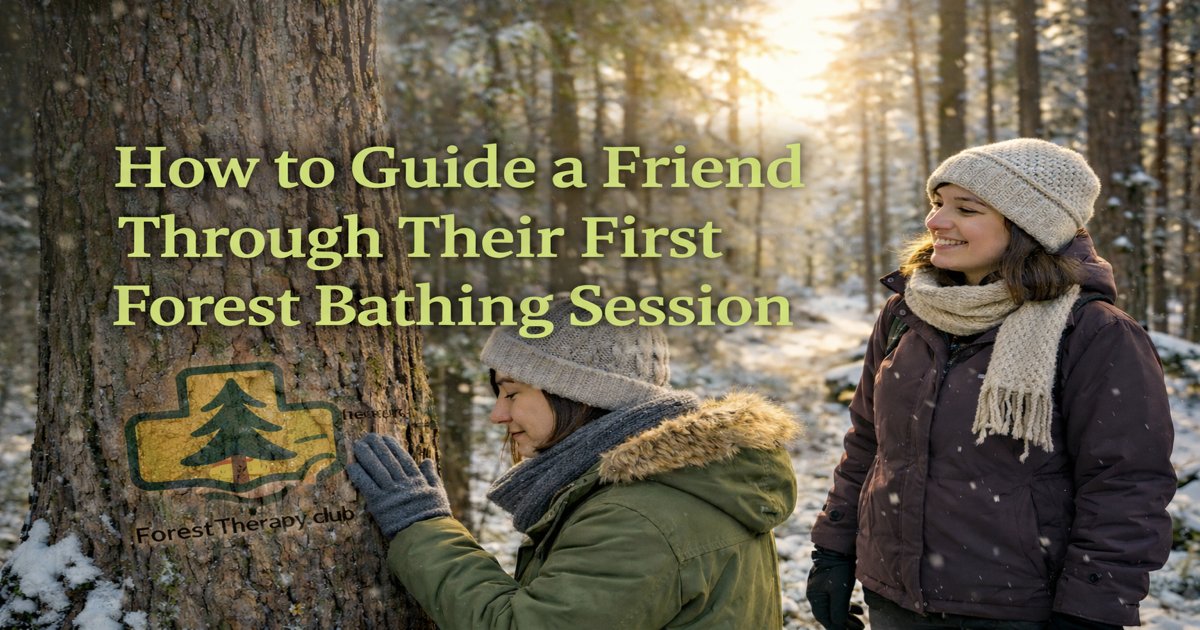
To guide a friend through their first forest bathing session, choose a quiet, accessible natural setting and gently invite them to slow down, engage their senses, and be present. Introduce a few simple invitations like “Notice what’s moving” or “Find a place that feels welcoming.” Focus on experience, not education, and end with a moment of reflection together.
Contents
Key takeaways
- Many people are curious about forest bathing but unsure how to begin.
- A guided experience from a trusted friend can be a safe, meaningful entry point.
- Forest time may reduce stress, improve focus, and deepen social bonds.
- Sharing nature connection builds reciprocity and awe.
- Forest therapy does not require expertise, just presence, safety, and care.
Preparing for the Forest Bathing Session
What makes a good location for a beginner?
Choose a location that:
- Feels safe and familiar to you
- Has clear paths and minimal noise
- Offers shade, places to sit, and diverse sensory experiences (like water, trees, moss)
Avoid:
- Remote or hard-to-navigate trails
- Overcrowded parks
- Exposed or weather-vulnerable spots
Should you explain what a forest bathing session is?
Keep it simple. You might say:
“It’s not a hike or a workout. It’s about slowing down, tuning in with our senses, and letting nature do the talking.”
Avoid over-explaining. Let the experience lead.
During the Forest Bathing Session
How should you open the session?
Start with grounding:
- Invite silence or a few deep breaths
- Offer a centering phrase like “We’re entering forest time now”
- Encourage letting go of goals or expectations
What kind of invitations can you offer?
Start with simple sensory invitations:
- “Notice the textures around you”
- “What’s catching your attention?”
- “Find something you want to be near for a while”
Pause often. Let silence and slowness do most of the work.
Should you talk or stay quiet?
- Limit chatter; keep your voice soft and spacious
- Offer one invitation at a time, then give them time alone
- Resist the urge to narrate or explain. Trust the forest.
How do you know when it’s time to close?
Look for natural signals:
- A sense of stillness or completion
- Tiredness or shifting light
- 30 to 90 minutes is plenty for a first walk
Invite them to share one word, image, or feeling from the walk. Or just sit together in quiet.
Common Mistakes
- Overloading with information or science
- Trying to impress or fix something
- Talking too much or rushing the pace
- Assuming everyone finds nature soothing
- Ignoring comfort (bring water, layers, tissues)
- Forgetting to check for accessibility needs
- Skipping a clear start and end
FAQ
Can I guide someone without being certified?
Yes, if it’s informal and non-commercial. Forest therapy guides are trained for group, trauma-aware, and professional practice—but you can still offer a mindful nature experience to a friend.
How do I help someone who’s nervous or distracted?
Normalize it. Nature doesn’t always feel safe or comfortable. Acknowledge that. Gently return to the senses. Let them know it’s okay to do nothing.
What if they want to talk the whole time?
Offer space: “Let’s walk quietly for a while and see what we notice.” People often shift into silence naturally. If not, let the connection be the gift.
Is there a structure I should follow?
Yes: Opening → Sensory Invitations → Sit Spot → Closing. But be flexible. The forest is your co-guide.
Should I bring anything?
Optional supports include:
- Water and snacks
- A simple sit pad or blanket
- Tissues or wipes
- A thermos of tea for closing
A Forest bathing session isn’t about doing it “right”—it’s about arriving, noticing, and being. By gently guiding a friend through their first walk, you create space for presence and shared wonder. The forest does the rest.
Try inviting one friend this week. Slow down, tune in, and walk quietly together.
