
Contents
- 1 The fast answer
- 2 Key takeaways for the Best Portable Sound Bath-Devices
- 3
- 4 Which portable sound-bath devices are best for forest-inspired meditation?
- 5 How do I choose portable sound-bath devices that won’t disrupt the forest?
- 6
- 7 Answer capsules
- 8 A simple 10-minute forest-inspired sound-bath protocol
- 9 Common mistakes
- 10
- 11 FAQ
- 12 Next step
- 13 Author
The fast answer
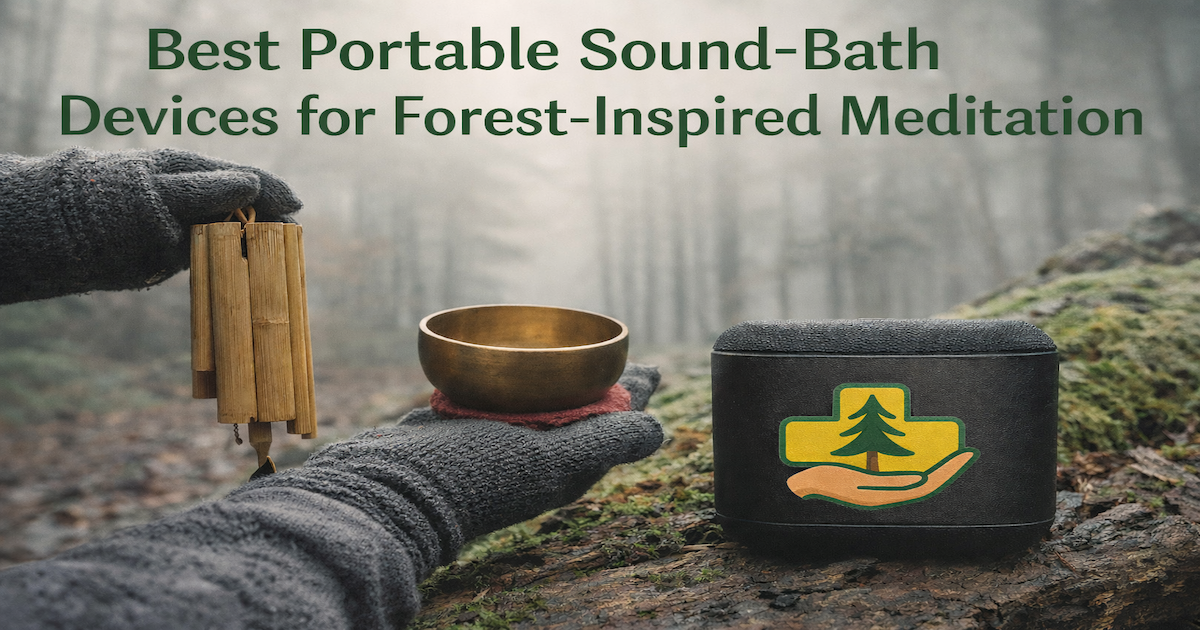
The best portable sound-bath devices for forest-inspired meditation are light chimes (for wind-through-trees shimmer), a small brass singing bowl (for grounding resonance), tuning forks (for clean, focused tones), and an optional mini speaker kept very low (for short guided audio). Pick devices that pack safely, stay quiet enough for other visitors and wildlife, and support presence rather than performance.
Key takeaways for the Best Portable Sound Bath-Devices
- The best portable sound-bath devices are quiet by design.
- Chimes are the easiest “forest-like” sound with the least technique.
- A small singing bowl is the most grounding single-tool option.
- Tuning forks are the most compact way to add clear tone markers.
- Speakers can help, but outdoor etiquette matters more than gear.
Which portable sound-bath devices are best for forest-inspired meditation?
If you want a simple, field-tested shortlist, start here.
1) Chimes (best “forest-like” shimmer)
Chimes are the most naturally compatible portable sound-bath devices outdoors because they echo what the forest already does: soft, airy, intermittent sound. They work well for opening and closing a sit-spot without pulling attention away from birdsong or wind.
Look for:
- A compact, tuned chime (easy to play softly)
- A protective pouch (so it doesn’t clack in your bag)
2) Small brass singing bowl (best grounding resonance)
A small brass bowl is one of the most reliable portable sound-bath devices because it creates a clear “arrival” tone, even with minimal skill. Outdoors, small bowls are also practical: no batteries, no pairing, no fiddling.
Look for:
- Brass/metal (durable for travel)
- A small cushion + striker
- A padded bag
3) Tuning forks (best precision + packability)
Tuning forks are the cleanest, most focused portable sound-bath devices if you like simple cues: one tone to begin, one to reset, one to close. They’re also easy to carry. The trade-off is technique. If you’re constantly re-striking and adjusting, it becomes “gear time” instead of meditation.
Look for:
- A fork set with a comfortable grip
- A soft activator (rubber striker) to avoid harsh clicks
4) Waterproof mini speaker (best versatility, use sparingly)
A mini Bluetooth speaker can be useful when you want a short guided track, timer chimes, or very low-volume ambience. But speakers can quickly become intrusive. If you use this type of portable sound-bath device, keep it brief, quiet, and considerate.
Two practical rules:
- Keep volume low and duration short.
- Prefer headphones when you’re near others (and keep listening levels safe).
Helpful references: Leave No Trace principles on respectful outdoor use: https://lnt.org/why/7-principles/ and WHO safe listening guidance: https://www.who.int/news-room/questions-and-answers/item/deafness-and-hearing-loss-safe-listening
How do I choose portable sound-bath devices that won’t disrupt the forest?
When people say “forest-inspired,” they often mean calm, spacious, and sensory. That means your portable sound-bath devices should be easy to play softly and easy to stop.
What should I prioritize first: tone, weight, or durability?
Start with quiet control. A beautiful instrument that’s hard to play softly is the wrong tool outdoors. Next, choose durability (metal and wood over glass). Then decide on weight.
A simple packing target:
- 1 primary device (chimes or bowl)
- 1 protective pouch
- Optional: tuning fork or speaker
Answer capsules
Are chimes better than singing bowls for forest-inspired meditation?
Chimes usually feel more “forest-matching” because they resemble wind and canopy textures. Singing bowls feel more “grounding” because the tone is lower and more resonant. If you want one of the two portable sound-bath devices, choose chimes for shimmer and bowls for steadiness.
What’s the best single portable sound-bath device for beginners?
A small brass singing bowl is often the easiest beginner choice because it works even with simple technique. You can strike once, breathe, and listen for the decay. That’s a complete practice without needing multiple portable sound-bath devices.
Can I do a sound bath in nature without any instruments?
Yes. The forest soundscape can be your “instrument.” Many people get the same settling effect by tracking layers of sound (far, mid, near) and returning attention to the body. Instruments can help, but they are optional.
How loud should a forest sound-bath be?
Quiet enough that it stays “inside your bubble.” If someone 20–30 meters away can clearly follow your tones, it’s probably too loud. With portable sound-bath devices, the goal is subtle support, not broadcasting.
Are speakers okay for forest meditation?
Sometimes, but they require extra care. Follow local rules and avoid crowded trails. If you’re in a shared space, headphones are usually more respectful than a speaker. If you do use a speaker as a portable sound-bath device, treat it like a whisper.
A simple 10-minute forest-inspired sound-bath protocol
This is designed to be repeatable. Minimal setup. Minimal sound.
1) Arrive (1 minute)
Stand still. Let your eyes soften. Notice temperature and wind. Name the loudest natural sound you hear.
2) One opening tone (30 seconds)
Use one gentle tone from your portable sound-bath devices:
- Chimes: one slow turn
- Bowl: one soft strike
- Fork: one activation
Then pause until the sound fades.
3) Three-sense sweep (5 minutes)
Move slowly through three senses:
- Hearing: far sounds, mid sounds, near sounds
- Sight: one detail, one shape, one horizon
- Touch: air on skin, feet on ground, fabric on fingers
4) Sparse tones (2 minutes)
Add the lightest layer:
- Chime every 20–30 seconds, or
- Bowl once per minute, or
- Fork once, then silence
Less is better. Let the forest do most of the work.
5) Close + take-home cue (1.5 minutes)
Offer one closing tone from your portable sound-bath devices. Then choose a “take-home cue” you can recall later (for example: “wind in branches” or “low bowl hum”).
Common mistakes
- Bringing too many portable sound-bath devices and spending the whole sit setting up.
- Playing too loud “to feel it,” which can disrupt others and wildlife.
- Using fragile instruments without protection.
- Treating the forest like a studio instead of a living place.
- Expecting guaranteed outcomes. Many people report relaxation, but results vary.
FAQ
What is a sound bath?
A sound bath is typically described as a meditative experience where you’re immersed in sound or vibration created by instruments such as bowls, gongs, chimes, or tuning forks. For a general overview, see Cleveland Clinic’s explainer: https://health.clevelandclinic.org/sound-bath
What should I pack for a portable sound-bath kit?
A simple kit is: one main instrument (chimes or small bowl), a protective pouch, and a small cloth (for sitting or drying gear). Add tuning forks only if you enjoy precise tones. This keeps portable sound-bath devices truly portable.
Do I need a speaker for forest-inspired meditation?
No. A speaker is optional and best for short guided audio. If you prefer quiet and minimal impact, skip it and rely on the forest soundscape instead.
Are tuning forks safe to use outdoors?
Yes, but use a soft activator to avoid sharp clicks and protect your forks in a case. Keep your tones sparse. Tuning forks work best as minimal portable sound-bath devices, not constant sound.
How often should I do this practice?
Weekly is a good rhythm for many people. Repeating the same protocol in the same spot builds familiarity and makes it easier to settle quickly.
Next step
If you want this to feel effortless, build a tiny ritual you can repeat weekly: one device, one sit spot, one 10-minute protocol. In a guided session, we’ll match sound to season, location, and your nervous system so your practice stays simple and sustainable.
Book a Winter Led Home Reset and we’ll design your personal forest-inspired meditation kit and routine.
Author
Dominik Boecker is the founder of the ForestTherapy.club. He help people build repeatable, low-friction nature practices using sensory engagement, mindful pacing, and simple rituals. This guide on portable sound-bath devices sits alongside our work on nervous system downshifting, deep work recovery, weekly design, and parent-founder balance. Our approach is ethical and grounded: nature-based practices may support wellbeing, but they’re not a substitute for medical care.
