
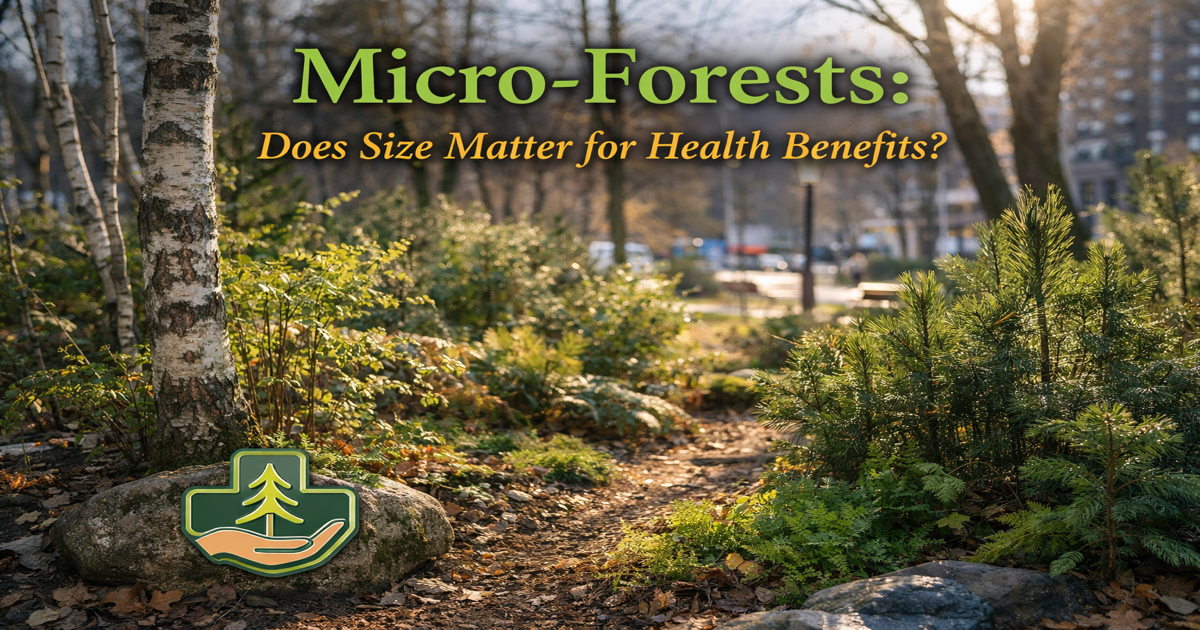
Micro-forests—dense, biodiverse plantings in small urban spaces, can offer many of the same health benefits as larger forests, including stress reduction, immune support, and mood improvement. While scale affects ecological function, studies suggest that even small, diverse patches support microbial richness, biophilic connection, and restorative experiences essential to forest therapy practices.
Key Takeaways
- Many urban areas lack access to full forests.
- Micro-forests are rapidly increasing in cities worldwide.
- Guides and planners need evidence to support small-space sessions.
- Microbiome exposure, biodiversity, and sensory input remain possible at small scales.
- Clients report real impacts even from short, small-nature immersions.
What is a Micro-Forest?
Micro-forests are densely planted, diverse mini-ecosystems, often the size of a tennis court, designed to mimic native forest layers. They follow principles like the Miyawaki Method, aiming for ecological restoration and human wellbeing.
Can Micro-Forests Replicate Forest Therapy Benefits?
Yes, to a large extent. Micro-forests offer:
- Sensory engagement: Sounds, textures, aromas, and visual complexity mimic natural forests
- Phytoncide exposure: Even small groves of coniferous or broadleaf trees emit beneficial compounds like alpha-pinene and limonene.
- Microbial diversity: Forest soil and air microbiomes, even in small plots, can impact immune health and skin microbiome composition.
- Biodiversity experience: While species count is lower than full forests, many micro-forests support birds, insects, fungi, and wild plants essential to biophilic connection.
What the Research Says About Small-Space Nature
- A 2022 review on urban green spaces found that exposure to biodiverse patches, even under 1 acre, improved mood and lowered cortisol in city dwellers.
- Forest therapy research supports the role of sensory and microbial inputs, not just acreage, as key variables in health outcomes.
- Forest edge and fragmentation studies show that small patches have unique ecological value and can still offer restoration if designed well.
Urban Design Meets Forest Therapy
Forest therapy guides can design meaningful sessions in micro-forests by:
- Using sensory invitations tailored to the space.
- Tapping into microbial benefits by including soil contact and barefoot walking.
- Educating participants on biodiversity, even if subtle.
- Embracing the “forest time” slowness, regardless of size.
Common Mistakes
- Assuming only large forests provide benefits.
- Overlooking microclimates and edge biodiversity.
- Ignoring air quality factors that affect small urban groves.
- Designing sessions that feel rushed due to the space’s size.
- Forgetting to incorporate local plant knowledge into urban plots.
FAQ
Do micro-forests have enough biodiversity to support forest therapy?
They can. While not as complex as old-growth forests, well-planned micro-forests can include multiple plant layers, attract pollinators, and foster microbial life critical for health benefits.
How long do you need to spend in a micro-forest for effects?
Research suggests even 15–30 minutes in green spaces with sensory richness and biotic stimuli can reduce stress and improve mood.
Are there risks to using small urban forests?
Potential risks include noise pollution, nearby air pollution, and degraded soil. But many of these can be mitigated with good site design and guide-led focus shifts.
Can forest therapy invitations be adapted for micro-forests?
Absolutely. Invitations emphasizing stillness, sensory focus, and close observation (e.g., textures, insects, soundscapes) work beautifully in small spaces.
Is there a minimum size required for forest therapy?
There’s no strict threshold. What matters most is ecological richness, safety, and sensory access, not size alone.
Micro-forests aren’t second-best, they’re strategic, scalable spaces for reconnection in an urbanizing world. With thoughtful guiding, even a patch of woodland in the city can become a site of slowness, wonder, and restoration.
Micro-forests offer more than greenery, they create intimate ecosystems where biodiversity, climate regulation, and human wellbeing intersect. These compact environments provide city dwellers with regular access to nature connection practices, including forest therapy.
When guides attune to the subtle richness of micro-forests, they can lead participants into moments of deep presence, even in the hum of the urban landscape.
