
By Dominik Boecker — Forest Therapy guide, educator, and nature-based facilitator at ForestTherapy.club. I design sensory-led forest bathing invitations and seasonal practices, including safe, consent-based use of conifer essential oils (pine and cedarwood) for scent-led grounding and breathwork.
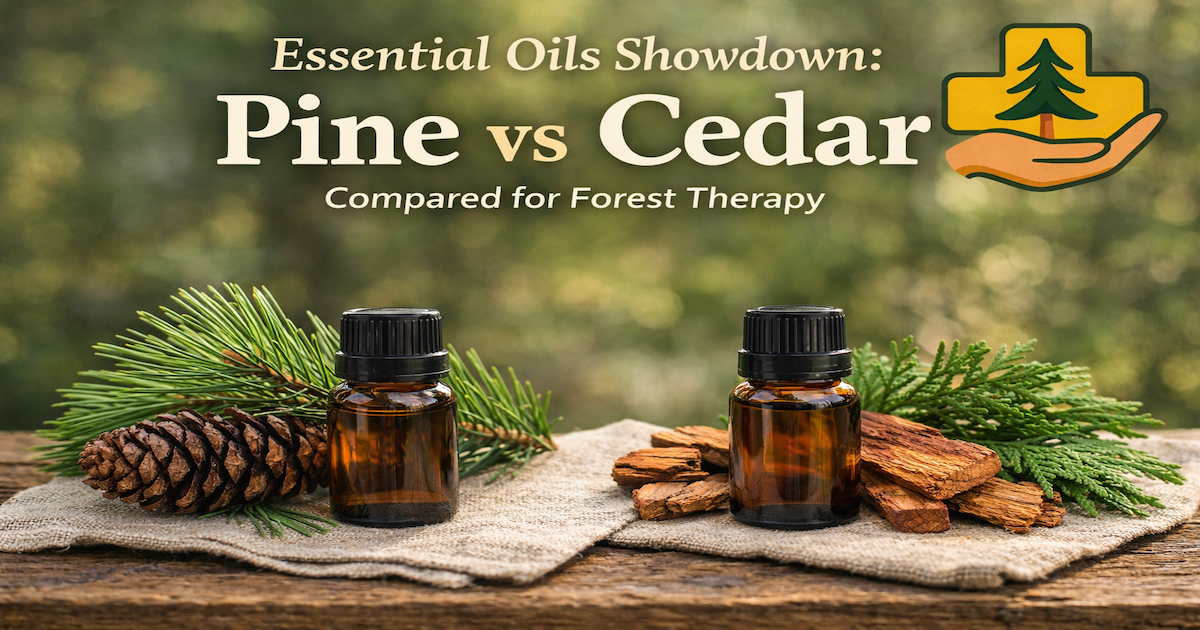
Pine vs cedarwood essential oil: choose pine for crisp, energizing “fresh forest air,” and cedarwood for warm, grounding calm. For forest therapy sessions, a simple approach is pine to open (wake up the senses) and cedarwood to close (settle and integrate). Always check the Latin name on cedarwood oils—different species smell and feel different.
Why This Matters
- Helps forest therapy guides select oils with purpose
- Supports sensory-rich session design indoors or outdoors
- Bridges plant-based traditions and modern aromatherapy
- Offers safe, accessible nature connection options year-round
- Honors the emotional tone of forest invitations
Pine vs Cedar Essential Oils: What’s the difference between pine and cedar essential oils?
Pine essential oil is steam-distilled from the needles of pine trees (commonly Pinus sylvestris). It has a bright, clean scent often associated with alpine air or winter forests.
Cedar essential oil typically comes from Cedrus atlantica or Juniperus virginiana. Its aroma is deeper, woodier, and more resinous—reminiscent of old-growth forests and dry woodlands.
| Feature | Pine Oil | Cedar Oil |
|---|---|---|
| Botanical Source | Pine needles (Pinus species) | Wood (often Cedrus or Juniperus) |
| Scent Profile | Fresh, sharp, green | Warm, woody, smoky |
| Emotional Tone | Uplifting, clearing | Grounding, calming |
| Common Uses | Invigoration, clarity, focus | Anxiety support, deep rest |
| Forest Therapy Role | Energizing breath, clear mind | Rooting awareness, soothing nerves |
How do forest therapy guides use these oils?
Forest therapy guides often integrate essential oils:
- At the start of sessions to set tone
- During breathwork or centering practices
- In closing ceremonies for emotional anchoring
Some use cotton pads, scent strips, or diffusers in shelters or during indoor sessions. Oils should never be applied directly to skin or plants during sessions without proper safety dilution.
Which oil is best for stress or anxiety?
While both oils may support nervous system regulation, cedar oil is typically preferred for:
- Creating a sense of containment
- Supporting rest and parasympathetic response
- Cultivating inner stillness
Client experience snapshot:
“I used cedar oil during a winter walk where the forest felt quiet and introspective. It deepened the sense of safety and allowed my group to settle in without effort.”
Are pine and cedar safe for everyone?
Understanding the differences in pine vs cedar essential oils also helps guides select safe, sustainable products. While both are distilled from coniferous trees, they vary in chemical composition, intensity, and energetic effect, making it essential to choose the right oil for the context and client.
Essential oils are potent. Use caution with:
- Children and pets
- Individuals with asthma or chemical sensitivity
- Pregnant or breastfeeding participants
Dilute properly or use indirect methods such as passive diffusion. For forest therapy, less is more.
Practitioner protocol:
“I prepare scent strips with 1 drop of oil, placed inside a glass jar. Participants open it gently to engage scent on their own terms.”
Guide Safety Checklist:
-
Screen for asthma, migraines, scent sensitivity, pregnancy/breastfeeding, pets present
-
Use passive methods first (strip/jar)
-
No direct skin application in-session unless you’re trained + consented
-
Keep distance (participants control exposure)
-
Ventilation (indoor)
-
“Less is more” rule: one drop is enough
Buy the right bottle
Ethical + quality checklist
-
Latin name + plant part
-
Steam-distilled / CO₂ (if relevant)
-
Country of origin
-
Batch number
-
GC/MS available on request
-
Sustainability statement (wild harvest practices, replanting, etc.)
Can you use both oils in the same session?
Yes, if intentional. Some guides pair them to mark transitions:
- Pine at the start to awaken presence
- Cedar at the close to seal experience
However, avoid blending them directly unless you’ve tested for compatibility—some participants may prefer distinct, single-note experiences.
Where can I find ethically sourced oils?
Look for:
- Organic or wild-harvested certifications
- Small-batch or distiller-direct sources
- Clear Latin botanical names
- Transparent sustainability practices
Avoid synthetic fragrance oils or any vendor that doesn’t provide GC/MS reports (purity tests).
Common Mistakes When Using Forest Therapy Oils
- Using synthetic or perfume-grade oils
- Over-saturating the environment with scent
- Forgetting to test for participant sensitivity
- Treating oils as cure-alls (they’re supportive, not medical)
- Skipping the energetic/emotional qualities of each tree
FAQ
Is there a big difference between cedarwood and atlas cedar oils?
Yes. Atlas cedar (Cedrus atlantica) is a true cedar with a dry, balsamic scent. Cedarwood often refers to Juniperus virginiana, a juniper with a sweeter profile. Both are grounding but have different energetic signatures.
“Cedarwood oil” can mean different species; effects vary.
Always check the Latin name on the bottle.
Can I use essential oils in cold weather forest therapy?
Yes. They can help anchor scent when other aromas are frozen or muted. Use containers or fabrics to help diffuse without freezing.
What’s a good pine oil for beginners?
Scotch Pine (Pinus sylvestris) is a good starting point—mild, clean, and widely studied. It’s uplifting without being overwhelming.
How should I store essential oils for outdoor use?
Use amber glass bottles, store in cool places, and protect from light. Essential oils degrade with heat and UV exposure.
Are there non-oil alternatives to evoke pine or cedar?
Yes. Fresh needles, bark bundles, or hydrosols (water-based plant distillates) offer a gentler, more ephemeral scent experience.
Closing
Pine and cedarwood essential oils each offer a doorway into forest atmosphere, pine for clarity and lift, cedarwood for grounding and integration. Let your session intention, participant sensitivity, and the season guide your choice.
📥 Download our Forest Therapy Essential Oil Quick Guide — includes safety tips, sourcing checklists, and seasonal pairing suggestions.
