
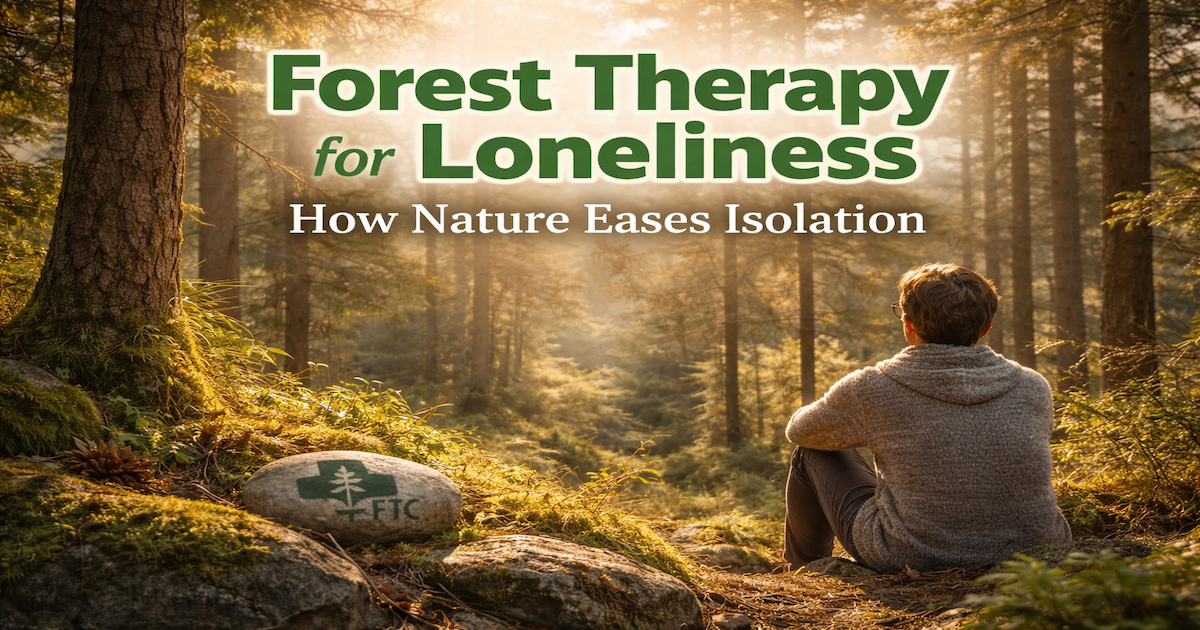
Forest therapy for loneliness is a gentle, nature-based practice that helps ease emotional disconnection, especially in a world where indoor living and screen time dominate.
Instead of offering quick fixes, forest therapy invites you to slow down, reconnect with your senses, and feel part of something larger.
This kind of presence with the natural world can shift loneliness into belonging.
Why Forest Therapy for Loneliness Matters
- Loneliness is rising due to increased indoor time and digital dependence
- Forest therapy supports nervous system regulation through sensory grounding
- Nature immersion can increase feelings of connection—even when practiced alone
- Forest environments promote emotional openness and prosocial behavior
- Practicing forest therapy for loneliness helps restore a relational sense of self
How Indoor Living Amplifies Loneliness
Many people now spend up to 90% of their time indoors. This indoor lifestyle creates more than just physical separation, it erodes emotional connection.
Common effects include:
- Sensory deprivation: Artificial lighting and sound remove the sensory nourishment found in nature
- Emotional fatigue: Disconnection from rhythms of the Earth dulls our inner life
- Social fragmentation: Remote work and urban isolation leave many feeling unseen and untouched
Forest therapy for loneliness helps counteract these effects by reawakening presence and relational awareness .
The Science Behind Forest Therapy for Loneliness
Research shows that even short periods of time in natural settings can reduce stress and increase wellbeing. When practiced with intention, forest therapy for loneliness has measurable effects:
- Lowers cortisol and supports parasympathetic activation
- Increases oxytocin and feelings of trust and calm
- Promotes awe and emotional openness, which reduce self-focused rumination
- Boosts immune function and mood through contact with forest microbiomes
This means that forest therapy doesn’t just change how we think—it changes how we feel and relate.
How Forest Therapy for Loneliness Works in Practice
Forest therapy for loneliness isn’t about fixing emotions. It’s about building relationship—with yourself, with the Earth, and with the present moment.
Here’s how it helps:
1. Nature Replaces Walls with Openness
Being surrounded by trees instead of ceilings expands awareness. One forest therapy practice involves standing with a tree and matching your breath to its stillness. Many people report feeling seen and held, without needing to speak .
2. Sensory Practices Bring Us Back to Life
Guided attention to scent, texture, sound, and light reconnects us to the body. The rustle of a leaf or warmth of sunlight becomes a real-time experience, not just a backdrop .
3. Solitude Without Disconnection
Forest therapy for loneliness often includes solo walks or sit spots. These moments of quiet allow you to feel part of the living world, even when physically alone .
4. Ritual and Reciprocity Rebuild Relationship
Small acts—offering gratitude to a stone, sitting in silence with a tree—foster a sense of being in dialogue. Over time, this rewires the nervous system toward connection .
Can You Practice Forest Therapy for Loneliness Without a Forest?
Yes. Forest therapy for loneliness can begin anywhere there is nature, even in small doses:
- A city park or green space
- A balcony garden
- A single tree outside your apartment
- A houseplant and open window
As Module 10 notes, what matters is not the size of nature, but the quality of your attention .
Try:
- Walking slowly outdoors while noticing five textures
- Sitting beside a tree and journaling for 10 minutes
- Listening to birdsong instead of a podcast
- Touching a plant at home with mindful presence
Common Mistakes in Practicing Forest Therapy for Loneliness
- Expecting instant results instead of letting connection build
- Treating nature as a tool rather than a relationship
- Rushing through without pausing for sensory experience
- Using forest therapy to avoid people, rather than reconnect with life
- Overthinking the “right” way to do it—this practice is intuitive
FAQ
Is forest therapy for loneliness backed by science?
Yes. Studies show it reduces stress, increases emotional regulation, and enhances feelings of connection—even when practiced solo .
How is forest therapy different from a walk in the park?
Forest therapy involves intention, presence, and guided or self-guided invitations. It’s about relating to nature—not just moving through it.
Can introverts benefit from forest therapy for loneliness?
Absolutely. Forest therapy is often ideal for introverts, because it provides connection without social pressure or small talk.
Is it a replacement for social interaction?
No. But it can help you feel more resourced, emotionally balanced, and ready to engage with others again.
What if I live in a city?
Forest therapy for loneliness can happen in parks, gardens, or even at home. It’s about presence and relational attention—not wilderness access.
When emotional isolation becomes part of daily life, forest therapy for loneliness offers a quiet doorway back to connection. The natural world reminds us: you are not alone. Every tree, breeze, and bird call is an invitation to remember your place in the living web.
Book a forest therapy session to begin reconnecting, gently, naturally, and at your own pace.
