
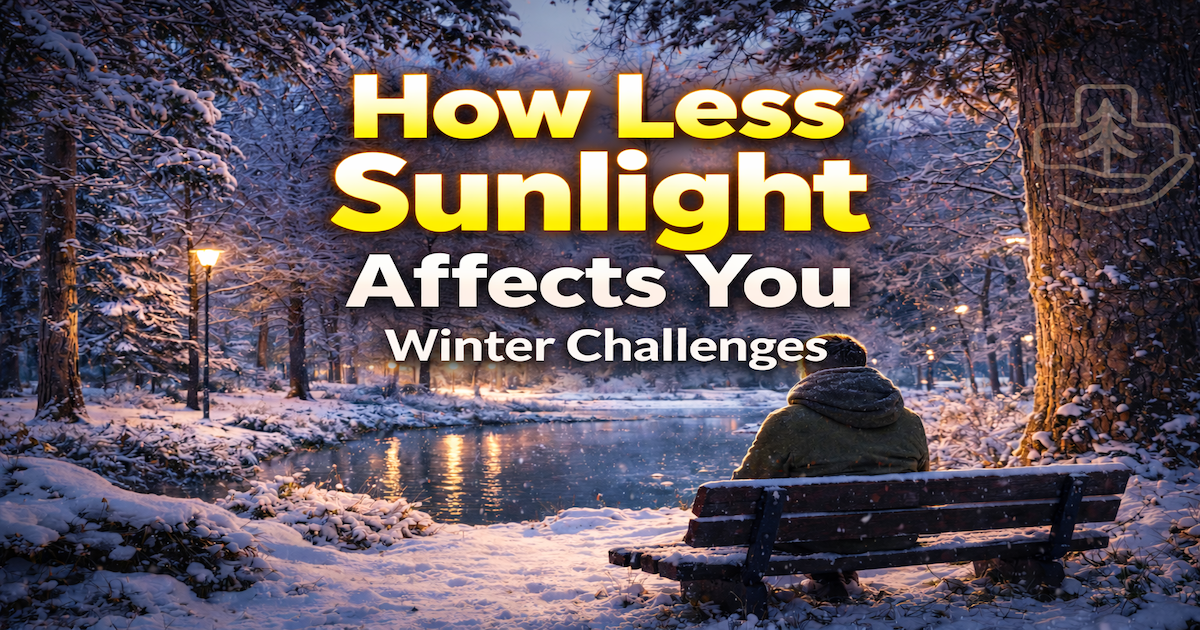
Why Winter Feels So Different and how less sunlight affects you.
Winter brings quiet.
But it also brings difficulty.
The days grow shorter. Light becomes rare.
And beneath the surface, our bodies begin to feel it.
Sluggishness. Restlessness. Disconnection. For many, the arrival of winter feels like a slow unraveling of energy, focus, and mood.
These aren’t just emotional experiences, they are biological responses to changes in light.
Winter Challenges Start With Light Loss
Sunlight is more than illumination. It is information.
When daylight enters the eye, it sends signals to the brain that help regulate energy levels, hormone cycles, sleep patterns, and emotional balance. These signals form part of your circadian rhythm — the internal clock that governs your body’s sense of time.
As winter sets in, this rhythm is disrupted:
- Light arrives late and fades early
- Melatonin (the sleep hormone) stays elevated longer
- Cortisol (which helps us wake and focus) rises more slowly
- Our energy, clarity, and mood begin to shift
This is not a personal failing — it’s a seasonal adjustment that affects all living things.
Common Symptoms of Circadian Disruption
These are some of the subtle (and not so subtle) ways your body may respond to winter light loss:
- Difficulty waking up, even with enough sleep
- Fatigue throughout the day
- Mood dips, especially in the afternoon
- Cravings for sugar, carbs, or caffeine
- Disrupted sleep or increased restlessness at night
- Social withdrawal or a sense of heaviness
These symptoms are common — and they have nothing to do with willpower or mindset. They are invitations to adjust, not resist.
Your Body Is Asking You to Slow Down
We live in a culture that ignores seasonal wisdom. While nature rests and retreats, the modern world demands the same productivity, the same pace, year-round.
But your body knows better.
Fatigue in winter isn’t laziness. It’s intelligence. It’s your biology remembering what most of us have forgotten — that we are animals, living in rhythm with the Earth.
When you feel tired, it may not be a problem to fix.
It may be a message to listen to.
How to Work With Winter, Not Against It
Winter challenges soften when we meet the season where it is — not where we wish it were.
Here are a few ways to align with winter’s slower rhythm:
1. Maximize Natural Light
Spend at least 20–30 minutes outdoors in daylight, ideally within an hour of waking. Even a short walk in morning light helps reset your internal clock and improve your energy and mood throughout the day.
Sit by windows when indoors. Open blinds early. Let light enter your eyes without filters when safe to do so.
2. Anchor Your Sleep Patterns
Try to wake and sleep at consistent times, even on weekends. Consistency stabilizes your circadian rhythm. Avoid screens 1–2 hours before bed. Instead, transition with soft lighting, warm teas, or journaling.
Remember — sleep is your body’s first medicine.
3. Use Gentle, Rhythmic Movement
If energy is low, don’t push, flow. Practices like stretching, walking, forest therapy, or slow yoga keep the body warm and mood elevated without draining reserves. Movement brings circulation to what feels stagnant.
4. Eat Seasonally and Warm
Winter challenges digestion as well as energy. Shift from cold, raw foods toward nourishing soups, root vegetables, and warming spices. Drink warm water or herbal teas throughout the day.
Let your meals reflect the season — slow-cooked, simple, grounding.
5. Cultivate Inner Light
As outer light fades, we’re called inward. This is a time to reflect, journal, meditate, or deepen creative practices. What once felt hidden in the noise of summer begins to whisper in the quiet of winter.
Welcome this quiet. It has its own kind of richness.
The Gift Beneath the Challenge
Yes, winter brings disruption. But it also brings invitation. To slow. To listen. To tend what lies beneath the surface.
There is a reason trees drop their leaves.
A reason bears go inward.
A reason you feel the pull to rest.
These aren’t obstacles to overcome. They are messages from your own ecology. Winter is not here to test you, it’s here to re-root you.
When you accept the slower rhythm, the season becomes less about surviving, and more about aligning.
When the light fades, your body notices. Your breath slows, your energy shifts, and your mood follows the seasons. You don’t need to override this wisdom. You need to remember it.
Less sunlight affects you because you are part of nature — not separate from it. And when you honor that connection, even the darkest months can become a time of restoration, reflection, and quiet strength.
